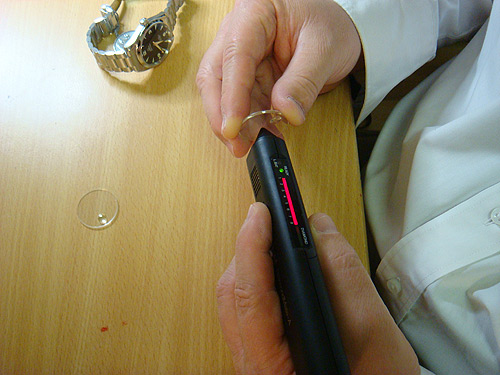
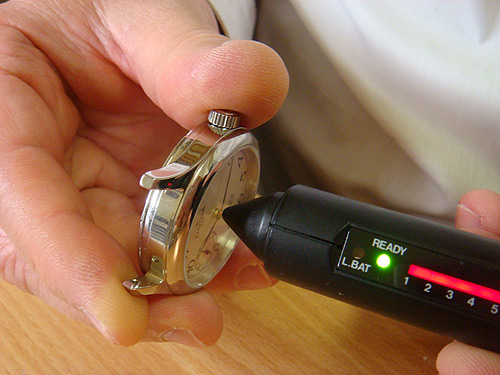
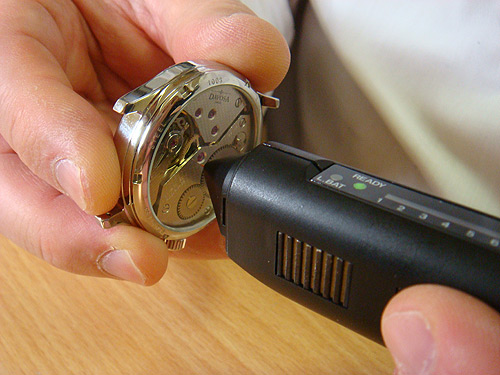
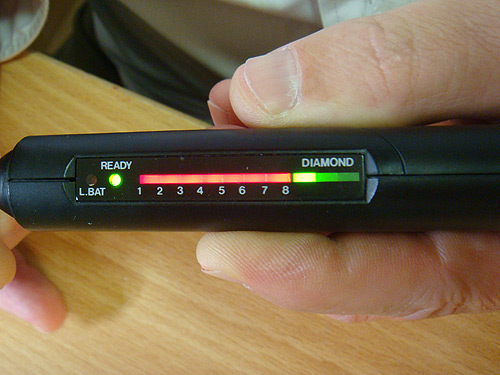
Here is a photo of Rolex Submariner 16610 that was dropped on a tiled floor. Due to the impact, the crystal glass cracked. Number of small glass particles went through date display window and found their way into the movement.
One not-so-small bit was lodged between sweep seconds wheel and centre wheel bridge which caused the watch to stop.
The owner was lucky that apart from a bent escape wheel pivot, no other damage was found. To my surprise, the balance wheel and escape wheel shock absorbers were not 'activated'.

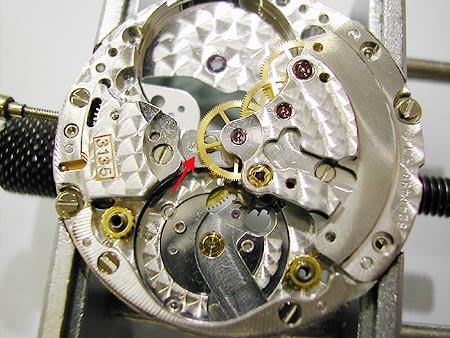
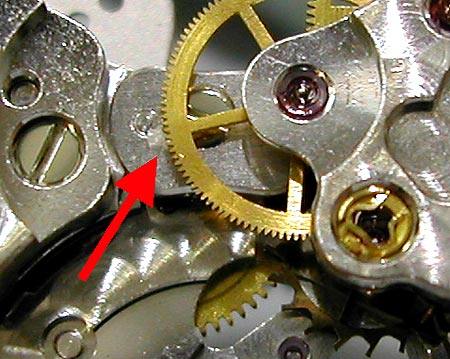
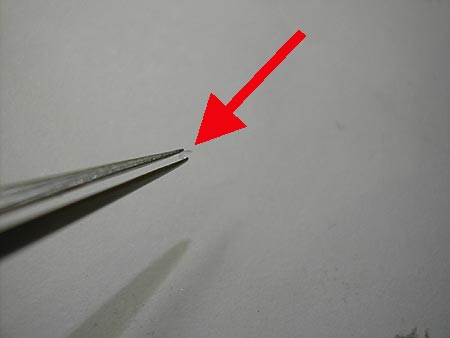
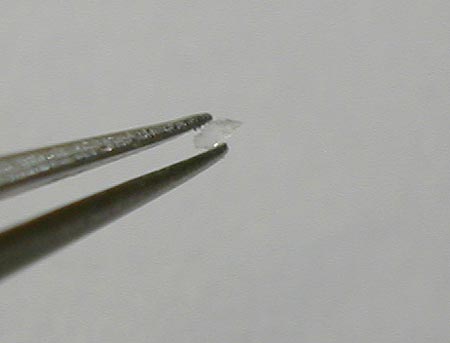
Conclusion: If you crack the crystal, complete overhaul is MUST - even if you have a brand new watch or one that has been recently overhauled. For that reason watch fitted with plexyglass would be more useful under tough conditions (military or sport activity).
[Q]: Can I trouble you to explain or point me to some info on how the shock absorbers are supposed to activate?In electrical circuit, the circuit breaker's job is to cut off the circuit whenever the current jumps above a safe level.
In mechanical watches, an equivalent of circuit breaker is shock protection system. The shock protection system is there to protect the critical alignment of components in the event of an unexpected physical shock, such as being dropped.
The pivots and jewels of the balance wheel are fragile in comparison to the mass they need to support, and without shock protection are the most likely part of the watch to be damaged under impact.
The Incabloc (or Kif in Rolex) system uses a specially shaped spring to allow the delicate jewels and pivots to shift in their settings under impact . When the impact is over, the springs guide the parts back to their original positions. If the impact is excessive, the shock protection system is activated and it needs to be reset by watch repairer.
Unfortunately shock protecting system is not perfect and it's efficiency and ability to protect vital parts is not always all that great. Angle of impact, G-force and surface play their role. In some cases, a relatively small drop could cause major damage and in other substantial drops cause very little or no visible damage.
[Q]: What is the difference between plexi glass, mineral glass and sapphire crystal?Plexiglass is a clear, lightweight type of plastic. Mineral glass is ordinarily glass hardened by a tempering process. Synthetic sapphire crystal is a very hard, transparent glass made of crystallizing aluminium oxide at very high temperatures. When it is heated, the synthetic sapphire forms round masses that are sliced into pieces with diamond-coated saws. These disks are then ground and polished into watch crystals.
Plexiglass, as one would expect, is the least expensive. It is also the least likely to shatter and the most likely to become scratched. Mineral glass, even though it has been hardened by a tempering process, is more likely to break than plexiglass. But it is also more scratch-resistant than plastic plexy. Synthetic sapphire is the most expensive glass crystal and the most scratch resistant. Watch crystals made of synthetic sapphire are often marketed as "scratch resistant", meaning they are very difficult - but not impossible - to scratch. Diamond can scratch them; so can man-made materials that incorporate silicon carbide. As pointed out by other forum members, due to the hardness of sapphire crystal, it is also brittle and shatters more easily than mineral glass or plexiglass.
Unlike plexy, mineral and sapphire crystals can not be re-polished.
Which crystal is fitted to your Rolex watch? An easy way to tell this is by model reference number: in general, watches with 4 code reference number (like 5513, 1680 etc) are fitted with plexy and 5 digits (16233, 16610 etc) are fitted with sapphire crystal.