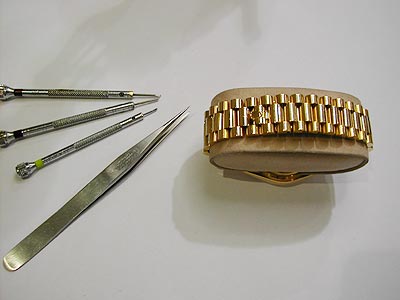
What would you say if I told you that there is a place where you can find a treasure trove of Rolex watches just waiting to be picked up? It's true. That's got your attention, hasn't it ? What will keep your attention is the knowledge that your Rolex may be the next to end up here. Yes, your trusty Submariner or Seadweller that you think is almost indestructible. “It's a Rolex you say, what could go wrong?”. And where is this Ali Baba's cave ? It's much closer to home than you think. It's called Sydney Harbour!
Personally, I know of at least a dozen or so Rolex watches that have been lost between the Harbour Bridge and the Heads. Imagine it … all of them are now sitting at the bottom of the harbour glinting up to the surface, yearning to be reunited with their careless custodian. Why is it so ? Well for one simple reason - the bracelet broke.
Before you start blaming Rolex for making inferior bracelets, let me tell you that after repairing thousands of Rolex watches, I have come to the conclusion that a lot of trusty Rolex owners simply don't give a second thought to the condition of the bracelet. It's rare that anyone bringing a watch in for service asks me to inspect the bracelet for wear and tear.
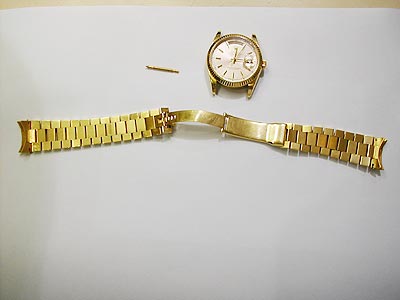
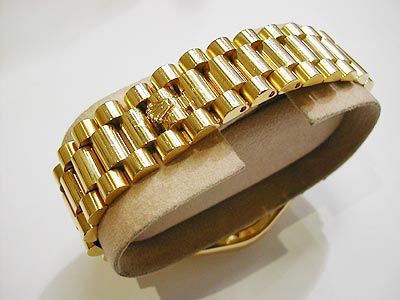
The one that nearly got awayHere are photos of a Rolex Submariner [ref 5513] that came in for repair just recently. This is the very watch that prompted me to post this story on the web to alert you watch collectors and watch aficionados. It's a good example of a bad example if you follow my logic. The proud, but misguided owner specifically requested that the bracelet must not be touched or repaired "because this will spoil its originality". He went on to add that he does not mind the 'stretch' because he prefers to wear it 'loose'. Well after all, it doesn't look too bad, does it?
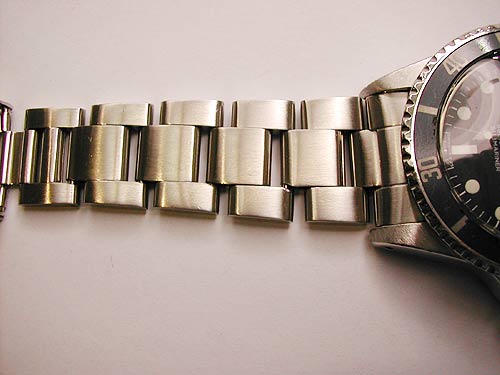
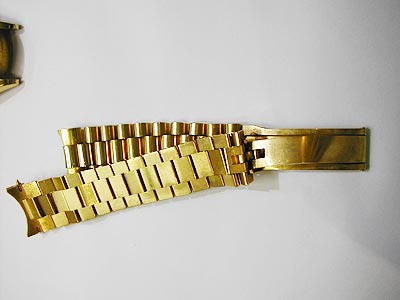
Except that on the wrist, his bracelet looks more like this: What he chooses to call a loose or comfortable bracelet is actually a worn out bracelet where the links are cutting into each other to the point where the gap between them is now 2-4mm.
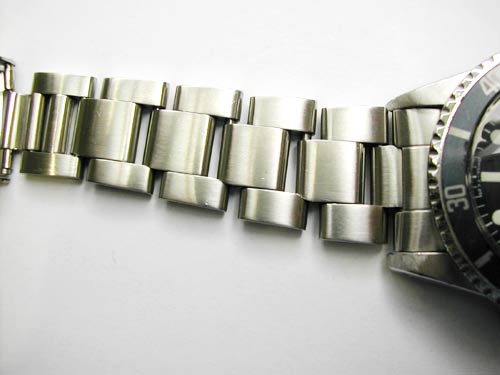
The reason for such an extensive wear is mostly due to a build up of dirt, grit, perspiration, skin acids, UV creams etc that over time act like a grinding paste that is accelerated with the constant flexing movements of the bracelet on your wrist. Steel links are very effectively ground to death by you wearing your watch too loose.
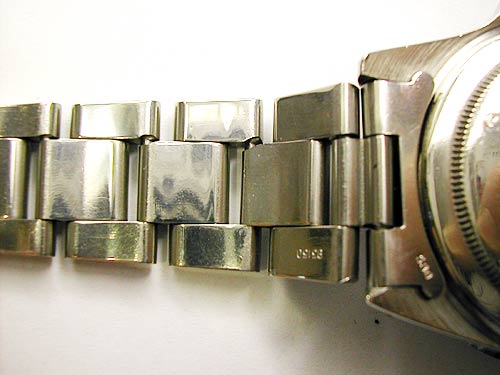
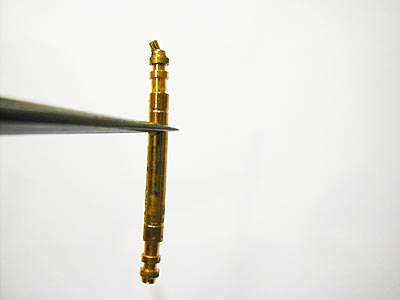
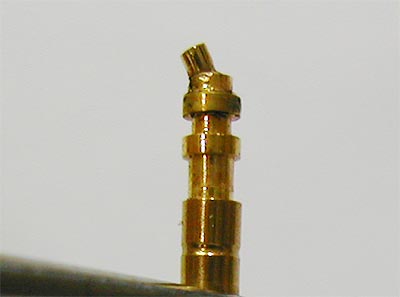
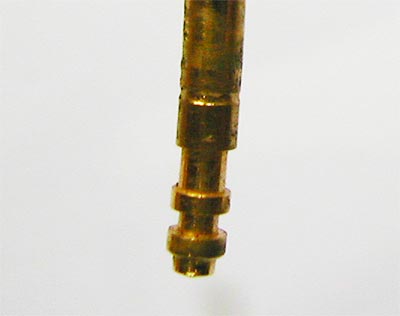
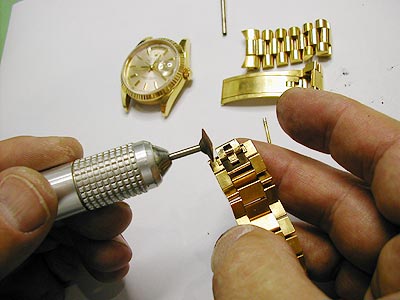
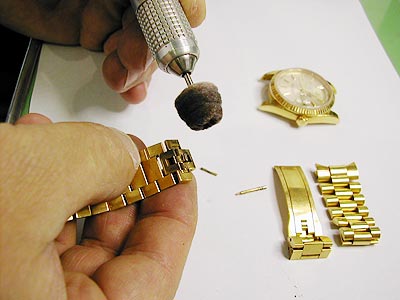
When the bracelet was separated from the case, another booby trap emerged. The spring loaded bar (pin) was worn out to the point where it was as thin as a paper clip. Just as a little test, grab a paper clip and bend it a few times and see what happens. That could be what your Rolex is relying on to not become an orphan. Interestingly, the other end of the pin is still in reasonably good condition, but it only takes one break at one end to lose your watch.
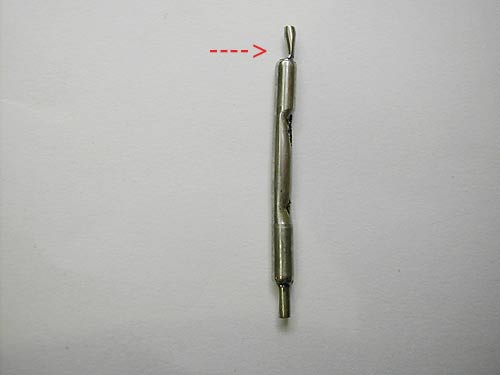 Out of sight – out of mind
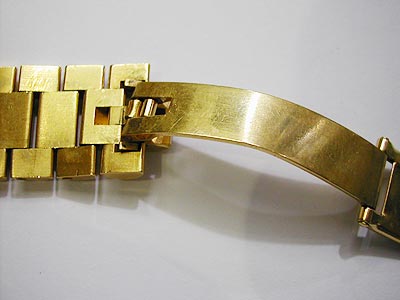
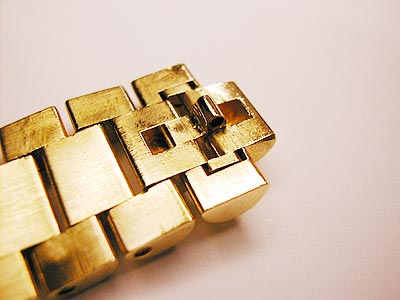
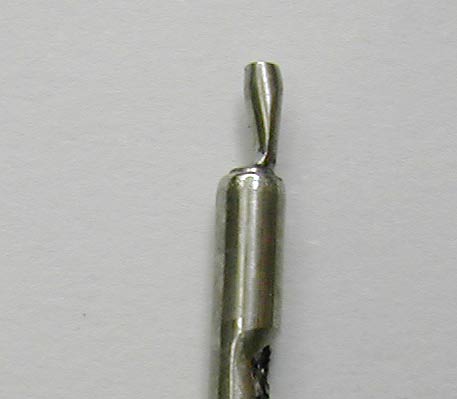
Take a closer look at x15 magnification.
"She'll be right mate" attitude at its best! No, she won't be right. It's just crazy luck that this poor victim has survived the last fishing trip.
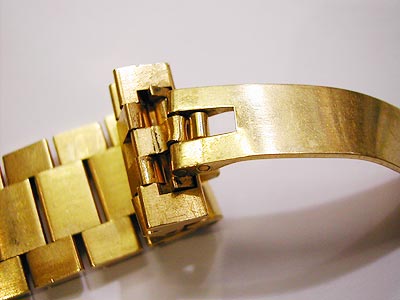
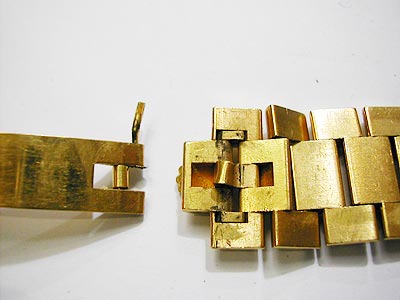
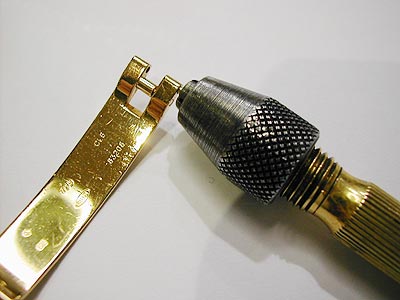
Another weak point is steel bar ('rivet pin') that holds the flip lock clasp assembly.
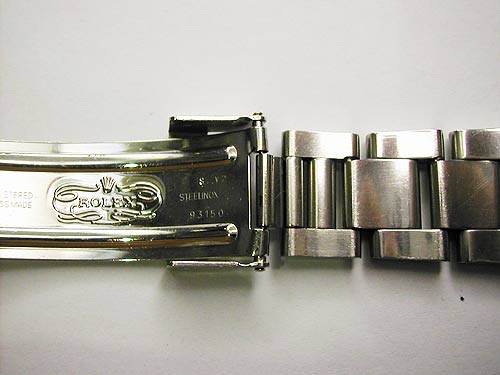
The entire weight of watch and bracelet is relying on the strength of this piece of wire. In a new bracelet this steel wire is exactly 1 mm thick. Here, at its weakest point it is now only half that - 0.55mm. It does not take much to snap ½ millimetre of pitted, corroded and flexed worn out piece of metal wire.
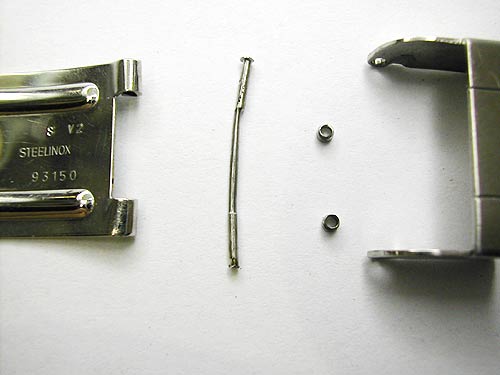
Keeping the watch bracelet in "original and unaltered condition" should not be your utmost priority. Bracelet links, clasp parts and spring loaded bars should be serviced or replaced whenever your watch is due for an overhaul or immediately when you notice any damage or wear.
A lot of watch fanciers also adore classic & vintage cars. Is that you ? Ask yourself, “would I keep my car's brake pads, tyres and shock absorbers in 'original' condition or should I replace them whenever they are defective?”
Here is what you should do to avoid the disappointment of losing your valuable and cherished Rolex:
- Service your watch on a regular basis - ideally every 3-4 years. Keep it clean - have the bracelet cleaned in ultrasonic cleaner at least once every 12 months.
- Avoid excessive polishing. DO NOT polish bracelet with metal polishing paste unless you can clean it in ultrasonic cleaner after. Metal polish will dry into a fine powder and embed itself in the bracelet and it will also act as abrasive material.
- Wear your watch reasonably tightly. Steel Submariner or Seadweller is NOT a piece of jewellery but a precision machine.
- Rinse in tap water after a day out in the elements.
As you all realise, your well looked-after Rolex will last for generations. The best way to preserve something in 'original precision condition' is to look after it. When it is time for your Rolex to be passed on as a treasured family heirloom, don't be the one who will be remembered by your family by the question, "Whatever happened to that glorious Rolex he had ?”
Happy fishing, sailing, boating, kayaking, diving, surfing, hang gliding, parachuting, aerobatics or whatever is your extreme pursuit!
Text and photos copyrighted.