Friday, February 17, 2017

Germany Update, Part One

***Josh and Tyler reporting from Germany: "No snow, beer too cold!"


Well, not quite - but probably not too far off either. Yes, the boys are having fun, and so far, plenty of good news. Our CNC lathe is ready; the official training has commenced and coding is well under way. With a bit of luck, by the end of the week they will be making their first watch components!
Sydney delivery and installation date is now June 1, which is in accordance to the previous estimate. The other good news is that the 316L steel samples obtained from an Australian supplier are within the required tolerances. So at least we won't have to air freight 4 metre long rods from Germany – or at least not for components smaller than 3mm.

The lathe itself is the crucial watch parts making machine, and this particular model is well used by both German and Swiss makers. Anyone from Nomos to Lange has it in operation so we know that machine is capable of producing the finest watch parts. Of course, it will take us many months - if not years - to master it, but we are definitely heading in the right direction.

Another piece of good news is that we should be able to make even more complex parts than we originally anticipated: the 6-axis lathe can accept some special 'attachments' capable of cutting very fine pinions as well as gears. However, we will be limited by the diameter – for components larger than 3mm in diameter (main spring barrel for example) we would need one more CNC lathe...


Exciting days ahead - so stay tuned for more!


Happy collecting,
Nick

Thursday, February 16, 2017

Doomsday

***Doomsday

In 2014 an Englishman knocked on my door. He introduced himself as a writer, working on a new title called ‘How the World Became Obsessed with Time’. He looked smart and sounded sharp, so I decided to give him a chance. We chatted for about 45 minutes on a subject he found fascinating; a small anonymous watchmaker from Australia taking on the Swiss heavyweights. Quite frankly, I forgot all about him and our conversation before the lift even hit the ground floor. 

Until last week that is, when a customer mentioned that he’d read about the rebelde project in a book. “What book?” I asked. “The one written by Simon Garfield – the best-selling British author”, he replied.


Wasting no time, I went online and lo and behold, I actually found the book. To my shock and horror, not only was I mentioned, but Simon had wasted three and a half pages penning down our conversation. I even got myself on the top of the index: Hacko, followed by Harrison (George, the watchmaker), Hermes, Hillary (Sir Edmund) and Hitler (yeah, that one).


Of course, I could not bring myself to pay the full retail price of GBP 16.99, so I found a ‘used copy in good condition', for just US $4. I’m not going to spoil your enjoyment of what is said, but I would recommend that you do the same. The book is definitely worth a read.

Timekeepers is a vivid exploration of the ways we have perceived, contained and saved time over the last 250 years, narrated in Simon Garfield’s typically inventive and entertaining style. As managing time becomes one of the greatest challenges we face in our lives, this multi-layered history helps us understand it in a sparkling new light.


Timekeepers: How the World Became Obsessed With Time
 By Simon Garfield
ISBN: 978 178 211 3195


Monday, January 30, 2017

The Buy Back

The core message of the Bloomberg article on the Swiss watch industry was hardly news: Swiss export was declining in every month of 2016. However, what caught me by surprise was this bit: according to the Federation of Swiss Watch Industry, watch manufacturers have bought back USD $1.3 billion worth of stock from their authorized dealers! Clearly, the manufacturers would rather buy back the stock and fill in their storerooms than to tempt dealers to discount. This is a surprising new strategy that will prevent a price drop but it will also further reduce production output. Rest assured that whoever decided to scramble serial numbers (and prevent buyers finding out the manufacturing date) is now regarded as a true industry visionary.

On the contrary, readers’ feedback to Bloomberg's article was less amusing. In essence, general wisdom revolves around two points: a) luxury watches don't sell because millionaires are frugal and b) not only do smart millennials no longer need watches to tell the time, but they are averse of showing off their status by wearing expensive watches. As far as I am concerned, both explanations are equally inaccurate.

While some millionaires are indeed misers and penny-pinchers, the majority of them actually do enjoy their life. The overwhelming majority of millionaires travel business and first class, not economy. Many of them live in luxury homes and love their hobbies, and don't mind spending their hard-earned cash on the things that give them pleasure. However, what makes them stay millionaires is the ability to delay the purchase and completely ignore the 'urge for instant gratification'. Millionaires rarely buy goods at the retail price level and would never pay a premium. They are simply waiting for that very special deal - whether it is a house or their favourite stock, a car or a watch - and are ready to close the deal when it suits them. They also have that very special power: the ability to instantly recognize the true (intrinsic) value of a goods or service and know the difference between value and price.

The myth that youngsters are no longer interested in fine timepieces is equally pathetic. I am yet to see a person - of any age for that matter - who is blasé, indifferent or apathetic once they strap on their wrist a 'live' ticking marvel of mechanical engineering and learn about its history. "I LOVE it" is the most common reaction, and often, that very timepiece becomes the first of many in a journey of sophistication and appreciation. The reason why millennials prefer iPhones to Pateks is that most of them simply have no disposal income and have not yet been enlightened and exposed to the wonderful world of horology. Youngsters have their priorities, and rightly so; education, family, mortgages and travel should always have the priority over investing in depreciating (yet so enjoyable!) assets. I say: give them enough time, and most of them will eventually 'get there'.

I for one am waiting for the Swiss watch treasure chests to fill in, flow over, spill out and to reach the grey market, and then to reach us, the ordinary people.
The sooner the better!

Tuesday, January 10, 2017

Rebelling Against the Swissness


Nancy Holten, 42, from the Canton of Aargau is a vegan and an animal rights activist.

She has been living in Switzerland since she was 8 years old. She is fluent in Swiss German and her children are Swiss. But Nancy’s application for Swiss citizenship has been rejected more than once.

Her sin: annoying her fellow villagers with her activism. Things like looking out for the wellbeing of animals. Cows wearing heavy cow bells; piglets racing and hunting; annoying church bells. Her outspoken comments in the media have made her “unwanted in the community”, and consequently, the fellow villagers are ‘rejecting’ her naturalization.

A spokesman for the local Government puts it nicely: “…Mrs Holten is rebelling against traditional Swiss values within the village…”.

Ah, bloody rebels…

Monday, January 9, 2017

rebelde in action!


Thanks to comrade Jesper, owner of a rebelde Control Tower Mark II, for sending this awesome photo in of his rebelde altitude test.


The temperature was -17C and he's pointing at Grossglockner, the highest mountain in Austria at 3,798m. He was pleased to report there was no condensation or issues with performance.

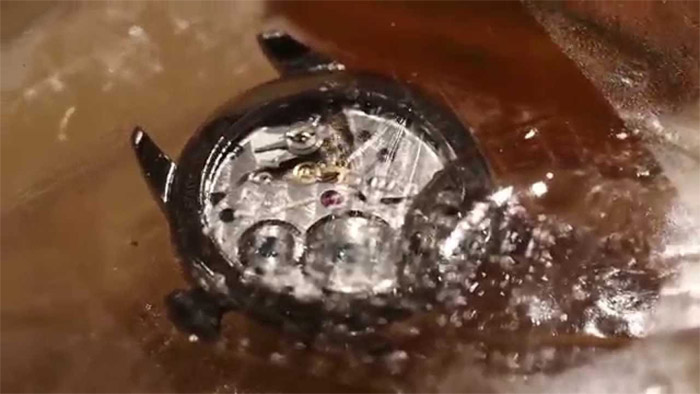
Pleased as we are, we're but not a bit surprised. Thanks to its super robust case, the rebelde is one of those rare beasts capable of withstanding extreme temperature changes while remaining fully water resistant, even with the crown pulled out.

Some of you might remember a little experiment with the first assembled rebelde which was frozen for 3 hours, then defrosted, yet which didn't miss a beat. Quite frankly, that was the moment I knew we were onto something here at rebelde HQ.

Friday, January 6, 2017

Free Expertise: Fool's Gold

I am sure that every lawyer on my mailing list would agree with me that self-representation in Court is not the brightest idea. There is that old saying that a lawyer who represents himself has a fool for a client. If lawyers use lawyers, what chance would a person like me have to win a court case?

We take it easy on Friday - trying to close the busy and stressful week as peacefully as possible. And so do you. My intention is neither to upset you nor to lecture, but I do have to point out something that for most people is obvious - and yet, for some, not so.

If you have bought a watch from a private seller then you are defining yourself in a court of second-hand dealing. Basically you are saying to yourself - and to the seller - that you are confident enough to conduct the deal; that you are 100% sure that the watch is genuine and you have no doubts in regard to its provenance (and that you are not dealing in stolen goods).
Which is all fine, and yes, in the majority of private deals, the saving justifies the risk.

However, you can't have it both ways: if you are defending yourself in court, you can't just call a lawyer halfway through the trial and ask for a free tip. And if you decide to buy a watch on eBay or Chrono24 then please don't call me either. It's not that I don't want to help - I just can't. I cannot tell whether the watch is genuine or not based on a low-resolution picture.
And quite frankly, no one can.

Buying a year old TAG or Omega watch which comes with the box, papers, receipts and valuation documentation is not that difficult. Such transactions are often straight forward ones.
Parting with cash on a 10 year old watch which comes with no box or papers is a skill. Making the same decision on a 60 year old vintage Rolex is an art form and believe it or not, there are probably no more than a dozen people in Sydney whom you would trust to conduct a deal on your behalf. Vintage watch experts are hard to find!

In my early days I used to deal a bit with a well-known Sydney dealer who would call in from time to time to 'check if I have anything valuable'. It was always interesting to watch him inspecting my stock - to the fine detail. He would take his time with the loupe, inspecting the dial and hands, and even made me disassemble the mechanism just to be sure everything was genuine. He was not a watchmaker himself, so I could tell that his expertise was gained after many years of dealing in watches, trials and errors, and without doubt, he paid the price of self-education. To this day, I respect his attitude - and the way he bought watches taught me that being 'extra careful' is the way to go. I can proudly say that I have never bought a fake Rolex and I hope I'll never will.

When it comes to vintage watches like Patek, it is fair to say that I am only a half-an-expert. Firstly, the Australian Patek market is miniscule and there are simply not enough watches in circulation to learn the finesses of the brand. Secondly, the return on investment is not worth my trouble. I would rather buy 10 Breitling than one Patek. And quite frankly, I don't know of any dealer in Australia who can honestly claim that he is an authority on the subject. To be a true Patek dealer you would have to set up your shop in Tokyo or London, New York or Geneva.

Louis Breguet was the most famous watchmaker of all time. Actually, he was so successful that even during his life, there were 10 fake Breguets for each genuine piece. You can only imagine how difficult it is to authenticate Berguet timepieces now, 200 years after they were created.

Only experts who have devoted their entire life to work of Breguet and who have restored his timepieces could call themselves an authority on the subject – a handful of watchmakers, museum curators and horological historians. And you can be sure that none of them would offer their expert opinion free of charge, based on a poor quality image or an eBay listing.

There are lawyers and lawyers, dealers and dealers - and each to their own.
Horology is enjoyed best when you deal with experts you can trust. And often - especially to someone who is just discovering the beauty of watch ownership - buying a brand new piece from your favourite brand shop is the way to go.

Saturday, December 31, 2016

2017/2018


In front of me are three rebelde watches. Freshly assembled, fitted on raw handcrafted straps and ticking quietly, they mark a new chapter of the rebelde project. These very three watches are the final result of a lengthy design process and will be our core ‘product range’ for 2017-2018.

The hard work is done, and as I type this the last dials are being manufactured. All other components are already in stock with assembly to commence shortly. The only remaining thing to be done is this email. For some strange reason, I now have to sell these watches to you by telling you how great, robust and reliable they are, and to convince you that as Australian designed and assembled watches they present excellent value for money.

Unfortunately, I simply can’t. Any marketing attempt feels both unnecessary and meaningless because the watch should sell itself on its own merits. I can’t tell you why you should buy rebelde; this is for you to figure out. If you’re not attracted to the project and the watch, then no amount of words and photos will change your mind. You either want it or you don’t.

The first of three is the rebelde50. Designed in the style of a 1930’s pilots watch, it’s really our flagship model, a watch designed to buck the trend of planned obsolescence in modern products and one that will last for generations with our guarantee that we’ll be here to keep it running for at least 50 years (for free) – a commitment that shows just how serious we are about what we do. We’re not going anywhere.

The second piece is our rebelde pilot’s watch with a chocolate dial. It’s so fresh that we don’t even have a name for it. Fitted in a 44mm stainless steel case, it comes with a swiss rebelde signed movement. This is one of our most wanted models and the good news is that we’ll guarantee the price a price of $2500 for both 2017 and 2018. However, the production run will be smaller than the previous one, limited to 50 pieces only.

The third rebelde is a reissue of our very first Control Tower model featuring the maxi dial. It comes in a 44mm stainless steel case and has a slightly upgraded movement. Again, the price is locked in at $2500 and the production run over the next two years will be limited to 75 pieces.

I do apologise for the low quality images below, but that itself is intentional. If you like what you see on the photo below then you’ll really appreciate the watches in the flesh.

So where do we go from here? Well, we invite you to come visit us and check out the watches in person. If you’re ready to place an order straight away then email us your preferred serial number and we’ll do our best to accommodate any such request. The first pieces will leave the workshop in March 2017, and yes, there will be some wait time, because as with all previous rebelde’s, each and every piece is assembled by me alone.

To all rebelde comrades and comrades to be, I wish you all the very best for 2017 and I remain grateful and humbled by your continued support.


p.s. Nothing breaks my heart more than the news of a stolen rebelde. Over the weekend, rebelde TiB 11/75 has been stolen along with a number of other watches in Melbourne. Please keep an eye out for any rebelde advertised for sale privately and let us know if you hear anything.

Happy collecting,
Nick

Thursday, December 15, 2016

Tool of the Week - Blankenhorn Depth Gauge

***Tool of the Week 


Yesterday a piece of equipment that we’ve long been wanting finally arrived. Many of you are aware of and have seen the optical comparator that’s sitting on our office floor (we’re now close to having a stand for it so that it can be put in the factory), but as advanced as that machine is, it’s only one part of the measuring process. It can measure distances and angles on a 2D plane, but can’t measure depth. The new Blankenhorn Depth Gauge that arrived yesterday allows us to do just that.


The depth gauge is an instrument consisting of two components; a mechanical micrometre dial indicator and the highly polished granite base table which holds both the part and the indicator.

We spent a good part of yesterday testing the machine, measuring all sorts of parts and pieces (human hair included), and were thoroughly impressed by it. It’s easy to use and has both high precision and repeatability. What’s especially interesting is that it’s purely mechanic - like our watches - and yet is capable of micron-level precision greater than many more expensive digital means.


Prior to purchasing the Blankenhorn Depth Gauge, we had been searching for a similar piece for some time, and it was by sheer chance alone that Nick and Josh discovered the brand. When they were visiting the machining fair in Germany just two months ago, Blankenhorn’s small booth was tucked away to the left at the entrance to the fair. They almost walked right by them as did most attendees, but being in no rush and having endeavoured to check out every booth possible, they decided to walk on over.

They based their purchase on first impressions alone, the representatives of the company convincing them of the quality of their products and that several large watch manufacturers, IWC included, use them. Neither Nick or Josh had heard of the company before, nor could they verify the veracity of the representatives’ claims, but Nick decided to take a leap of faith and went ahead regardless.

And he’s glad he did. Our expectations were well and truly exceeded, the depth gauge not only measuring just as it should, but also being extremely well made; something that’s not always a given. It’s clearly built to last. German engineering at its best.

The calibration certificate that came with the gauge was issued from a third party AQRAT calibration laboratory, located in Esslingen in Germany, which is a nice touch. We’ll almost certainly need more measuring equipment as we move into part manufacturing, and we now know where we’ll be looking first.


Wednesday, December 14, 2016

The Peak of Watchmaker Screw Manufacturing

***The Peak of Watchmaker Screw Manufacturing

The shiny tiny bit on the tip of my finger is a very special horological component. It is a screw. But what makes it special is the fact that it is one of the smallest screws in a watch mechanism. It comes from an Omega Flight Master manufactured in the 1970s and here is the curiosity: the screws you find in watches made today are not any better, shinier, more precise or even smaller. Watchmakers have been making such small screws for at least 200 years. And despite all the advances made in manufacturing technology, we reached the peak of screw making many decades ago.


Many visitors to our premises wonder why that big machine is sitting on the floor in the middle of the office. The answer: it’s awaiting its transfer to our newly built workshop. And what it does? Well the optical comparator allows us to see and measure the exact dimensions of even the smallest components like the above mentioned screw. And in laymen’s terms this screw is just over half a millimetre thick (or precisely, 600 microns), with the thread pitch of just 0.2mm. This 'piece of knowledge' is the very starting point in designing our own screws. Before we can draw and construct we must master the skill of taking precision measurements. And the beauty of our big machine is it can measure dimensions 10 times more precisely than we can even read.

The above screw as seen under the comparator. 


The CAD drawing of the same screw.

What an exciting journey!


Note from Laura, Nick's assistant: when I first saw the screw I didn’t even believe that it was a screw. It was explained to me that the purpose of it is to hold a tension spring attached to a barrel which also holds a small gear in a chrono-hour counter train. And here is the photo of the actual assembly showing two of those tiny screws doing their job. 

Monday, November 7, 2016

Planned obsolescence

***Planned obsolescence is when a product is deliberately designed to have a short life span. 

It is purposely and intentionally designed and manufactured to disintegrate, or to be non-repairable, or simply to under-perform.  At the same time, the manufacturer's marketing department will work hard to convince you that you should remain loyal to the brand and replace the obsolete product with the latest version.

There are countless examples of PO consumer products: from mobile phones to automobiles, computer operating systems, hardware, washing machines to printers – and watches.


The concept has been around for almost 100 years. It originated in Switzerland when the representatives from the world's largest lightbulb manufacturers, Philips, Osram, General Electric and others got together to form "Phoebus", a lighting cartel. Light bulb lifespans had, by 1924, increased to the point of crimping sales. The companies thus jointly agreed to reduce the life of lightbulbs to a 1,000-hour standard. Phoebus members marketed the shorter design life as an effort to produce brighter and more energy-efficient bulbs. However, the only significant technical innovation in the new bulbs was a steep drop in the operating life.

The other form of planned obsolescence is to design a product which is impossible to repair, or when the repair costs are deliberately too high. Turning a traditionally durable product into a throw-away, single-use one is the ultimate in planned obsolescence. It is well documented and researched that some manufacturers deliberately make the serviceman's job difficult, discouraging any attempt of repair. For example - the main bearing of the front-loading washing machine is integrated in the frame and almost impossible to replace. Another example - mass-produced watches have often the entire case factory-sealed.
"Suicide hands" is a term coined by watchmakers frustrated by inferior, self-destructive watch hands fitted on expensive watches.


The creativity of planned obsolescence is limitless: products are fitted with special screws, batteries or seals, or would require very specific tools and diagnostic equipment to be serviced. And surely, as a subscriber to my newsletter, you are well familiar with the outright restriction on supply of spare parts in the watch industry. Not to mention sophisticated take-overs and acquisition of independent watch parts manufacturers with the sole intention to limit the competitor’s access to strategic parts.


The ultimate victim of planned obsolescence is the consumers, forced to replace products which, if designed 'properly' in the first place, could easily last for decades.  Not to mention the economic loss to society and environmental pollution.


In 2015, as part of a larger movement against planned obsolescence across the European Union, France passed legislation requiring that appliance manufacturers and vendors declare the intended product lifespans, and to inform consumers how long spare parts would be produced for any given product. From 2016, appliance manufacturers are required to repair or replace, free of charge, any defective product within two years from its original purchase date. Hardly a victory in my book, but at least it is an attempt to curb planned obsolescence to a degree.


In Sweden, legislation has just been proposed which would cut tax on the repairs of bikes, clothes and shoes. Swedes would also be able to claim half the labour cost of appliance repairs (refrigerators, washing machines and other white goods) from their income tax.


Three years ago, before even the first rebelde was design or assembled, we announced the core philosophy behind the watch: we are going to be known as watchmakers who will offer a robust, reliable and repairable watch. Today, those three core values remain as important as ever. My goal is to be known as the maker of "planned rebirth".


The idea is simple: instead of limiting its lifespan, we intend to keep your rebelde keeping time as long as possible.


The action plan will require a long term commitment and will be based on following:


- unrestricted and unlimited availability of rebelde spare parts
- transfer of skills and knowledge to young watchmakers in areas of design, assembly and servicing
- continuing with design of models which will have interchangeable components. For example, each and every rebelde model (steel/titanium/gold) uses same winding stem, gear train, escapement and main spring. The middle case of Pilots and Control Tower models are identical, and so is the sapphire crystal and case back, etc.).
- ability to become a self-sufficient watch component in-house manufacturer, minimizing the reliance on other parts suppliers.


While the Swiss Phoebus will forever remain a case study of corporate greed and planned obsolescence, I honestly believe that one day, rebelde's "planned rebirth" product design model will be studied as an example of good design philosophy.
 

Your rebelde is here to stay, never to become obsolete. If you share our philosophy then we welcome your business.

TiA 48/50 - $3,000 - available for immediate delivery


TiB 08/75 - $3,000 - available for immediate delivery


Happy collecting,
Nick

Friday, October 21, 2016

Apprentice Corner: Top 10 Watch Videos

***My Top 10 Watch Videos

Something a bit different today - I thought I’d share with you some of my favourite watch videos on youtube. Narrowing it down to just 10 was no easy task, but I decided to choose those that display the genius, passion and perseverance that goes into watchmaking.


#1: Vacheron Constantin - Ref. 57260 - The Most Complicated Watch Ever Made

I can’t tell you how many times I’ve watched this video. Hundreds of times, at least. The reference 57260 represents the absolute pinnacle of watchmaking. Only Vacheron Constantin (and possibly Patek Philippe), with over 200 years of accumulated expertise, could pull off such an incredible piece.
There is, and only ever will be, one of these pieces. Vacheron Constantin doesn’t care how much money you’ve got (though you definitely need deep pockets), nor do they care how famous you are. They have to WANT to make a watch for you. We don’t know who they made it for or how much it cost, and though I’ll never get to see it in person I nonetheless consider it a real privilege to see the watch in action. Inspirational.
I’ve heard that Vacheron is working on something else, still a number of years away, which will top this. How do you beat perfection? I can’t wait to find out.

https://www.youtube.com/watch?v=InYrmk3Ezb8

#2: Patek Philippe 5175R Grandmaster Chime Watch

No explanation needed. Be prepared to pick your jaw up off the floor after witnessing only some of the work that went into this extraordinary piece.

https://www.youtube.com/watch?v=SGPjFFMD3c0

#3 The Single Men - Masters of the Incredible and the Beautiful

Many of the greatest independent watchmakers and CEO’s of larger companies are interviewed in this fascinating documentary. A must watch.

https://www.youtube.com/watch?v=thAKJnp0ntU


#4 Talking Watches With Roni Madhvani

Of all the people interviewed in Hodinkee’s Talking Watches series, Roni Madhvani is most certainly the least well known. And yet, at least to me, his collection is by far the most interesting - but then again I’m a huge fan of watches with bizarre shapes and daring dials. I mentioned one of the watches he displays (the Patek 3412) in a previous book review, so it was exciting to finally see one ticking away. His collection is absolutely stunning and so very unique.

https://www.youtube.com/watch?v=4lJIIHGyD_A

#5 Invenit et Fecit - A short documentary on F.P.Journe

F.P. Journe is a modern trailblazer. He’s a truly rebellious watchmaker who has established an extremely successful brand while remaining completely independent. His watches aren’t for everyone (though you really need to see one in person to get a proper idea of how nice they are), but they’re completely distinct and can be mistaken for no other.
This documentary provides not only an interesting insight into the man himself but also a good overview of the nature of the industry over the years.

https://www.youtube.com/watch?v=8ciWgA1QiMk


#6 Our Maison - "Beyond the gesture" by Jaeger-LeCoultre

I’ve never heard anyone say something bad about Jaeger-LeCoultre. They make my favourite watch - the Reverso (okay, equal favourite with the Rolex Prince); they’re innovative, distinct and have a commitment to quality that is second to none.

https://www.youtube.com/watch?v=ahdP3uPqAOU


#7 Clockwatch: The Daniels Wristwatch

Who was F.P. Journe’s hero? George Daniels. This is the one name that we talk about constantly here. Simply put, George Daniels (1926-2011) was the greatest watchmaker since Abraham Louis-Breguet. Nick, Josh and I read through his seminal Watchmaking book almost every day (I’ll do a review on that one in a couple of years when I finally manage to get a proper grasp on it all!), seeking answers, advice and guidance as we work towards manufacturing components right here in Sydney. This video is a nice little introduction into the legendary figure.

https://www.youtube.com/watch?v=H_XK2sR30Kw


#8 Talking Watches With John Goldberger

Probably the next least-well known person Hodinkee has interviewed, John Goldberger is perhaps the most knowledgeable collector around. I previously reviewed one of his books and mentioned that the only reason you need to buy the book is because Mr. Goldberger produced it. He’s such a cool character and one could listen to him talk for days. So cool, in fact, that he casually grabs a cheese knife, dusts it off on his jacket and then proceeds to bust open a two million dollar Rolex 4113 without a moment's hesitation.

https://www.youtube.com/watch?v=NgSYZIUrRkw


#9 John Mayer On The IWC Big Pilot, Past And Present

I didn’t want to include three videos from Hodinkee because I wanted to highlight some of the great content produced by other watch news sites, but alas, I’m a huge fan of both John Mayer and IWC so I just had to include this one. I guess I’ll just have to make another list!
There’s nothing overly interesting here, it’s just a guy having a nice ol’ chat about a brand and model he’s super passionate about - something I myself love doing with other collectors. It’s always a blast.

https://www.youtube.com/watch?v=SdKqR_CBRBk

#10 Born To Design Franck Muller Watchmaking - SolidWorks

Franck Muller is a brand that is totally unafraid to push the boundaries in all aspects of watchmaking. Their designs are utterly unique and the mechanics within are always innovative and made to the highest standard. This video is especially of interest since we’re also using SolidWorks to design our watches.


https://www.youtube.com/watch?v=cNgIsYbcJ3M

Apprentice Corner: Book Review

***Book Review of the Week:
Vintage Rolex Sports Models - by Martin Skeet and Nick Urul


Vintage Rolex Sports Models, written by long time collectors and watch enthusiasts Martin Skeet & Nick Urul, is a comprehensive reference for any fan of Rolex sports watches. The ‘sports’ watches consists of the Submariner, Sea-Dweller, GMT-Master, Explorer, Turn-O-Graph and Cosmograph.


Each section begins with an overview of the history of the model, describing the catalysts that lead to its conception, design inspiration, choice of movement and even how it was marketed.


This is followed by each of the model’s references listed out chronologically with even the minutest changes noted: font variations, case sizes, movements, bracelets, hands, finishes and everything else that could possibly differ is described.


My favourite section is without question the one on advertisements & literature. Full of pamphlets, magazine spreads and other advertising paraphernalia, it’s a fascinating insight into how Rolex as a brand and watch innovations in general progressed over the years. It’s rather amusing to read how watches were marketed in the 1940’s-1990’s: big bold statements like ‘a diver's dream come true!’ and ‘Rolex conquers Everest!’ were accompanied by long gushing testimonials from famous wearers and shameless self-promotion as to how damned good Rolex really is.


Need to confirm that you’ve got the right box? Check that the paperwork matches up? How do you make sense of the serial number? It’s all here with accompanying photos that’ll help you know exactly what you’re dealing with.


The price guide section is, of course, obsolete now, but such information is best checked online anyway.


There is one thing that I feel detracts from the book, however. One of my favourite things about watch books is the beautiful photographs of the watches that make you want to pick up the book time and time again, regardless of whether you’re interested in the information therein. Unfortunately, all the pictures of the models and their different references are seemingly just computer renderings. Good ones at that, but most of the watches look rather two dimensional and are without any of the ‘character’ that draws people to vintage Rolex.


In fairness, with over 140 models featured and some of them being exceedingly rare, the authors would have had a hell of a time trying to photograph them all. As well, some might see this as a good thing as it enables one to more clearly distinguish the different references, as some of the variations between them are quite subtle indeed. Nonetheless, I still think it would’ve been nice to have an actual picture or two in each section.


If you’re a serious Rolex collector with a focus on their sports watch offerings then this book would surely prove to be a valuable asset. The book was published in 2002 so don’t expect to see any information on watches produced thereafter. It is, after all, a vintage Rolex book, so if this is what you’re after it should be perfect for you.

Wednesday, September 28, 2016

Book Review: Longitude, By Dava Sobel

***From Apprentice Corner: Book Review


Longitude: The True Story of a Lone Genius Who Solved the Greatest Scientific Problem of His Time, By Dava Sobel


Longitude, written by Dava Sobel, tells the story of John Harrison, an inventor of the highest magnitude who spent over 40 years feverishly devoted to solving the greatest scientific problem of his time.

The book has been adapted into a TV series, won the British Book of the Year in 1997, as well as many other awards. So much praise has been heaped on this book that I needn’t add to the chorus, but I feel it necessary to give the book a brief introduction for those that might not have heard of it.

In the days long before GPS, sailors used a technique known as ‘dead reckoning’ to figure out their position, wherein sailors would calculate their position at sea using a known previous position and advancing that position based on estimated speed and direction. With wind, tides, imperfect measuring instruments and a whole range of other variables affecting the calculation, what could possibly go wrong?

A lot did, and often. Even after improvements in celestial methods that helped determine longitude, the problem persisted. The most accurate lunar tables still had errors (errors which compounded based on your position on Earth) and they relied on cooperative weather to be of any use at all. One degree of longitude equals approximately 111 kilometres; the slightest error in calculation meant the difference between running aground or perhaps never seeing land again!

The costs to the seafaring nations were enormous. Precious cargo and thousands of lives were lost. The British, French and Spanish governments offered enormous rewards for any one person able to resolve the problem, but most laboured in vain. Many of the greatest clockmakers and scientists ranging from Galileo to Edmond Halley gave it a shot. Isaac Newton implied that the dilemma was unlikely to be resolved by mechanical means. The fact that one man was able to satisfactorily resolve the problem with his incredible marine chronometer is hard to fathom.

The trials and tribulations of John Harrison, the competing designs and the plots of the sailors that so desperately needed a resolution to the problem are beautifully documented in Longitude - Dava Sobel is one of the finest science writers on the planet. I won’t comment too much on her extraordinary science writing ability but suffice to say that you won’t be left perplexed by any concepts at any point and will be enthralled throughout.


Of particular relevance, the Australian National Maritime Museum in Sydney has an exhibition on now titled Ships, Clocks and Stars,featuring many navigational instruments used back in the day, replicas of John Harrison’s early clocks and his original H-4 watch - the very watch that practically solved the problem once and for all. The exhibition finishes on the 30th of October so you’d best get in quick!

www.anmm.gov.au/Whats-On/Exhibitions/On-Now/Ships-Clocks-Stars

Hearth of Swiss Horology

***Helvetia, here we come! 


On Sunday afternoon we crossed the German-Swiss border near Schaffhaussen, the home town of IWC.


The wide, no-speed limit German autobahns were behind us, and the narrow country roads of Jura led us slowly to Zurich then further south to La Chaux-de-Fonds, the hearth of Swiss horology. We were on the mission: to visit three second-hand precision machinery dealers who specialize in watchmaking.


Before I go any further: while Switzerland and Germany are neighbours and while German is one of 3 languages officially spoken in Switzerland, there is a huge distinction between the two countries and their citizens.  I am not going to sugar coat it:  I like dealing with Germans, and I absolutely despise the ever-present Swiss corporate arrogance. The Swiss simply lack the humbleness of the Japanese, the flamboyance of southerners, the openness and warmth of eastern Europeans, the American loudness, the curiosity of Scandinavians or, dare I say it, the quirky, self-mocking English sophistication. They cannot be impressed, bought or excited. Swiss don't smile.

Doing business with the Swiss is never a mutually beneficial – from the moment you step on their soil, it is painfully obvious that your presence will be only tolerated for as long as you are happy to pay ridiculously overinflated prices.  And their cuisine just sucks: too greasy, too heavy.

Luckily, the small Swiss second-hand dealers are refreshingly different from the large corporations so despite my prejudice, and despite the fact that most of them only speak French, we do get along well.  But the truth is simple: like it or not, La Chaux-de-Fonds is the epicentre of the world of watchmaking and if you are to buy a precision second-hand tool, this is the place to look for one.

When watch corporations acquire new production lines, the old equipment is on-sold to second hand dealers. The business is still done in secrecy, strictly guarded from newcomers, conducted by third, fifth or seventh generation of family members.  In a city of 35,000 where 20 percent of the population directly work in the watch industry, everyone knows everyone. In just a couple of hours, we've heard all the current gossip: who is hiring and who is firing, who is expanding the manufacturing capacity and who is selling the equipment due to overstock of watches. In a radius of just 5 kilometres, we'd seen the production facilities of 20 brand names. What amazed us, once again, is how closely those 'brands' are interconnected and how closely they rely on each other and their suppliers.

What we call 'in-house' production is more (as Josh said) an intricate web of incestuous relations. Many own shares in each other’s businesses, they sit on each other’s boards, use the same highly specialized component makers, the same raw material and operate the same parts production machines.  And when appropriate, are happy to stab each other in the back.

We saw machines which were 'still hot' just pulled out of production and those that had been sitting in storerooms for 50 years, never to be sold.  And the variety and quantity of stock on offer is simply amazing.  "This one came from xxxx and here is the one from xxxx factory. Would you like the workbench from xxxx? We just got delivery of eight." We saw a row of 50 gear cutters (hobbing machines) and another row of 50 cam operated lathes. This was the very equipment used to manufacture parts for your 1970s Omega Speedmaster or Rolex Submariner, Longines and Zenith. 


Unfortunately, most of them were highly customized, were missing crucial tools or simply were too complex to operate. Or just too heavy or way overpriced. But all of them are still amazingly precise, and when restored would outperform modern CNC machines. Swiss don't throw anything away and you can get anything you want, if you have enough money.

After a couple of days of roaming and seeing thousands of machines, we'd got a fairly good idea what we could use in rebelde production. But we were not in hurry to part with our hard earned cash. We were there to build relationships and make ourselves known as future customers.  More detailed report will follow, including some very exciting photos!

On Tuesday, we decided to visit a company specialising in a very specific area of watchmaking. As much as I would love to, I cannot disclose their name. Let me just say that they produce components so crucial to a watch that even the most prestigious brands are dependent on their supply. Without them there will be no Swiss watches. Now, I have to admit that I was not aware of their importance. If I was, I probably wouldn't have bothered to call. But we were 'in the area' and they actually sell a machine which produces that crucial component, so we had nothing to lose.

The moment we arrived in front of their building I knew that we had actually made a mistake.  But it was too late to turn back - so we bravely stepped in.

Even today, 24 hours later, I still can't figure out what really happened.
The recollection of events is so incoherent - like the recollection of a boxer who was knocked out in the first blow, waking up the next day in hospital.


First, we watched the 20 minute corporate video, probably directed by some Hollywood director. The message was simple: our host was in the watch business before Rolex and before Lange and before anyone else.   The business is privately owned, which is cool, but as the only supplier of the most critical components, they enjoy their own status so much that no amount of money can buy their independence. Yes, they do have a machine to sell to us (although they never sold one to Australia or Africa) but they really don't see the reason why we would want one.

When I was finally allowed to speak, I pointed out that we'd done our homework. We know that we can afford their machine - while we do come from Australia, the money is not an issue. Quickly Josh took over: he clearly explained that we understand their manufacturing technology and that we don't think it is rocket science. We can be trained and we are looking for a partnership.  While the machine itself is impressive, both of us confidently concluded that the machine will be outdated eventually, and that we will be investing in a 'niche of the niche' so the resale value of their machine is zero - and that is zero in any currency.

Our host agreed. Fine, if we insist, the machine can be ours for $300,000. However, the contract of sale will include a clause which stipulates that we will be trained to operate the machine but we will not be trained to actually make components; the machine itself will be supplied with no tools, therefore it would be our job to work out who the tool suppliers are and which material to use to produce components.  Roughly, if we are clever enough, in 20 years we'll be making that critical component 'down under'.

In my books, this sounded like an insult. The time came to shake hands and thank our host for the opportunity to learn more about corporate Swissness. To keep the record straight: on the way out we got two Swiss chocolates wrapped in company colours. But the aftertaste is still bitter.

The good news is that a number of small independent watchmakers in both Germany and Switzerland are working hard and investing heavily in watchmaking technology.  In 5 or 10 years from now, there will be other players in the field. No one stays on the top forever, and often an underdog comes with a revolutionary or cost effective solution and solves the 'unsolvable' problem.

rebelde is not in a hurry, and right now, we already have so much on our plate to keep us busy for years to come. However, after this meeting, we clearly defined our priorities: we will be doing business only with suppliers who see us as equal and who understand and respect our mission. rebelde will bow down to none!

[to be continued...]

Book Review: ‘PloProf’ by Jon Wallis

***From Apprentice Corner


This week I’m reviewing ‘PloProf’, a book about the Omega Seamaster Professional 600 written by Jon Wallis, custodian of the deskdivers.com horological site and contributor to the Omega Lifetime magazine.


I should say from the onset that I’d never really given this watch the time of day it deserves. I’d seen it before, of course, but in my arrogance I’d simply dismissed it as something of a novelty hidden in the ranks of Omega’s diverse Seamaster range.


I usually choose all the books I review, but it was Nick who recommended this one, perhaps wanting to shake things up a bit. I hesitantly agreed, not quite knowing if I’d be able to focus on this book for more than a minute or two - getting through a book with over 150 pages solely devoted to one watch seemed like an exercise in tedium.


By chance alone, the very first page that I opened the book onto just happened to feature one of Omega’s advertising pieces that accompanied the watch when it first launched. It read:  “It may not look pretty on the surface, but deep down it’s beautiful”. As I was to find out, this description is an apt one.


Launched over 40 years ago, the PloProf was developed in tandem by French offshore salvage company COMEX and the legendary explorer, conservationist, filmmaker, innovator, photographer, author, naval officer, oceanographer and hero of mine (phew!) Jacques Cousteau.


Omega had already been to the moon and back, but the underwater world - an environment far more hostile to timepieces - remained to be conquered. Divers of the day had their own specific needs and no watch existed that was up to the task. The PloProf was born purely out of necessity. The book explores, in great detail, these requirements and how they helped to form the PloProf.


That it was made for a very specific purpose should be immediately clear. The PloProf is perhaps the most distinguishable watch of all - it simply can’t be mistaken for any other. Its features immediately capture the eye, but require explanation. Justification, even.


When I first saw the red button I thought it was a helium escape valve, similar to those found on the Rolex Sea-Dwellers and Omega Seamasters. In fact, when pressed it unlocks the bezel, allowing it to be rotated. It turns out the watch has no need for an escape valve - its integrated insulation easily able to protect the watch from harm when plunging into and coming back from the deep dark depths. This, along with the bright orange minute hand, dial colour, strap, winding crown and other features are all explained and rationalised by the author. There are even disassembly guides for any watchmaker brave enough to try and pull it apart.


On paper, the PloProf should be an absolute winner: it’s a watch with a unique shape, great movement, incredibly tough, limited in quantity and it has a story behind that’s hard to beat. It still, however, remains a watch possessed by a brave few - those that are actually divers. Anyone confident enough to take a plunge to such depths surely pays no mind to others, but it hasn’t yet found a strong following ashore. Many people, like my former self, cast it off as an oddity. It wasn’t made to be worn above the surface, they say. But who’s to say it can’t be? If you’ve got a wrist large enough to wear it comfortably, the author of ‘PloProf’ with his enthusiastic and persuasive manner, has convinced me that it’s a very fine choice.


The book is lavishly illustrated and covers almost every conceivable topic related to the watch. 


Even if you never intend on owning a PloProf, a true watch fanatic might still find value in this book. The story of its development, the competing designs and the impact it had on the watch world is one that would surely interest them. It’s a watch worth knowing about.

Friday, September 16, 2016

Action from Stuttgart

***We knew pretty much what to expect: action and more action, excitement, glamour.

We knew we'd be overwhelmed and completely blown away. Yet when Josh and I entered the foyer of Stuttgart's international machining fair yesterday we realized that we would leave the event irreversibly changed forever.


AMB is the third largest machining event in the world. Over 1,500 exhibitors are spread through 9 massive halls, all keen to showcase their latest machinery, measuring equipment, tools and materials, the cutting edge technology, production robots and, simply, their market dominance and engineering superiority.

One can watch as many youtube videos as they like, but only when you actually see the action for REAL can you begin to comprehend and appreciate what mechanical engineering is all about. Standing next to a CNC lathe the size of a semitrailer machining 2,500kg steel while it's been flicked around on 5 axis and carved as if it is a piece of Swiss cheese is nothing but the utmost humbling experience.
The roaring sound of the tool digging into the material, flying blue steel chips, waterfalls of pressurized coolant - yet no vibration! Just millions of lines of code being executed with incredible precision.

In large, the event goes way beyond showcasing just individual corporations and makers - it showcases our ability, as humans, to overcome some of the most intriguing challenges. And as designers and builders, we humans came a very long way.

You may wonder what made Josh and I travel around the world to attend the fair.
To put it simply: we are here to learn. The AMB is an opportunity to see all the machinery we've been dreaming about since we've decided to get into watchmaking. We wanted to get the priceless first hand experience, to see the equipment in action, but also to meet the makers who built them.
To hear their story, to find out what made them excited and motivated enough to invest their resources in the watchmaking industry. And then to see if we can become part of their success by planting a small seed of horology somewhere on the other side of globe.

"So where are you from? Australia? AUSTRALIA? We didn't know there are watchmakers in Australia! Seriously??"
This was the most common reaction once we'd explained who we are and what we want to do. The technological and cultural shock was genuinely suffered by both parties, which made every introduction a unique and memorable event. But after the initial shock, and hearing the rebelde story, almost all equipment makers we've talked to were more than happy to share their story too.
And to see how they could possibly help us, or at least to point us in the right direction.
The common denominator was the same: the piece of equipment that was in front of us was developed over decades of painstaking work, sacrifices of more than one generation of engineers, featuring incredibly advanced technology. We wanted to know everything. "So who uses our mills? Rolex, of course. And Lange. Yes, IWC, and Breitling. Who else? Cartier..." The names were not mentioned as marketing points but as proof of longstanding relationships.

We've met not only machine makers, but those who make machines so they can make their own watch prototypes. This handful of makers are the Formula 1 of machining.
They not only brought the complete mills and lathes, but pulled them apart, so anyone can check the true rotation of spindles, and the way tools are held so it can cut metal with 0.1 of micron tolerance. These makers would not just sell you a ready-made machine, but would make one specifically to meet your production requirements.
For us, this was a world we didn't even know existed.

To be honest, some of our favourite Swiss pieces of equipment - those we were prepared to sacrifice our lifetime savings for - left us underimpressed.
We felt that we simply could not justify such an investment. We felt that something was not quite transparent and therefore we've simply moved on. Yet at the same time we've found hidden gems, like the Citizen R-4 lathe which looked far superior to some of their Swiss counterparts, more robust and more user-friendly. The R04 is now on our most wanted list and Josh and I feel that this is a piece of equipment we can learn how to use in 2-3 month's time, allowing us to produce the first in-house screws and winding stems, and later more complex parts like sliding pinions.

Of course, after talking to engineers and even machinists who operate watchmaking machinery, it has become clear that the machine itself is just one of the segments in the production process. Having the right tooling, measuring equipment and correct raw material was equally important. Not to mention readiness to put months into the trial and error phase. As strange as it may sound, most watchmaking technical materials and alloys are still the best kept secret. It is obvious that in order to make your own parts you need to cooperate with someone who is already making those parts themselves, and that comes with a price tag.


We've met the kings of watchmaking mills: Willemin and Macodel. We told them that we would be grateful for a photo opportunity and a catalogue because we would never be able to afford their mills (the basic 'naked' machine without any tooling starts at $700,000). But we got a very friendly handshake from their sales director and compliments for our efforts to travel so far just to say hello. We parted as friends.

Our final visit was to a German mill maker. I am not going to mention their name - not yet - but they are considered the Porsche of watchmaking machinery.
For an hour we listened to their story which was honest and stripped of any marketing pitch. And they listened to ours. While it was clear that we cannot afford Porsche, it was equally clear that Porsche was interested in a small rebel from down under. Immediately, on the spot, Josh was offered training - not only how to operate machine but training in their German factory in equipment maintenance, diagnostic and repair. They were interested in building a long term relationship and extended an offer for a factory tour.
To us, this was something worth the money and something worth sacrificing for.

To be continued...